
Close-up of a woman smiling with bright white teeth, both hands gently framing her face
Dental operating microscope on every case
CQC registered clinic
Dentistry Awards finalists

Regulated by CQC
BAPRAS – British Association of Plastic, Reconstructive and Aesthetic Surgeons member
BAAPS – British Association of Aesthetic Plastic Surgeons member
Dentistry Awards Finalist 2025
General Dental Council Registered
General Medical Council Registered
RealSelf Top Doctor
Root Canal Treatment

Root Canal Treatment in Nottingham: Microscope Led Endodontics by Dr Stefania Stincone

Microscope assisted root canal treatment by Dr Stefania Stincone, BDS, MSc Endodontics. Calm, unhurried care.

What is a root canal treatment?

Root canal (endodontic) treatment is performed when the soft tissue inside a tooth, the pulp containing the nerve and blood supply, becomes inflamed or infected. Left untreated, that infection can spread through the root and into the surrounding bone, causing increasing pain, swelling, abscess formation and eventually loss of the tooth.

The procedure removes the inflamed or infected pulp tissue from the canal system inside the root, disinfects the space, shapes it, and seals it with a biocompatible filling material. Once sealed, the tooth no longer has a living nerve, but it is still your tooth, still rooted in your jaw, and in most cases will function normally for many years. For patients where the tooth cannot be saved, tooth extraction followed by a dental implant may be the right alternative.

At Zenith, every root canal is performed under a dental operating microscope by Dr Stefania Stincone, BDS, MSc Endodontics. Microscope assisted treatment allows Dr Stincone to see more canal anatomy hence improving success rates of the treatment.

Zenith Cosmetic Dental treatment room with a dental chair, overhead light, cabinetry and X ray unit
1.

Pre Treatment

You’ll first come in for an assessment appointment with Dr Stincone. This includes a thorough check of your tooth, simple tests to see how the nerve is responding, and a small radiograph of the area. If the tooth is more complex or has been treated before, a 3D radiograph may be needed to get a clearer picture. By the end of the appointment, you’ll know whether the tooth can be saved, whether root canal treatment is the right option for you, and exactly what the cost will be. Nothing will go ahead unless you’re happy to proceed.

2.

Treatment

On the day of your treatment, the tooth is completely numbed so you’re comfortable throughout. A small protective sheet is placed around the tooth to keep it clean and dry. The dentist then works using high‑magnification equipment to see everything clearly. Any infection inside the tooth is carefully removed, the small channels inside the tooth are gently cleaned and shaped, and the area is thoroughly washed with a disinfecting solution to remove bacteria.

3.

Post Treatment

Once the inside of the tooth has been thoroughly cleaned and prepared, it is sealed to stop bacteria from getting back in. A temporary filling is then placed to protect the tooth until the final restoration is completed. It’s normal to feel some mild tenderness for a day or two afterwards, which can usually be managed with over‑the‑counter pain relief. Before you leave, you’ll be given clear aftercare instructions so you know exactly what to expect.

4.

Final Restoration

Most back teeth need a crown after root canal treatment to protect them from cracking when you bite and chew. Research shows that placing the final protective restoration promptly is one of the most important factors in helping the tooth last long term. The crown is usually fitted within a few weeks, once any post‑treatment tenderness has settled.

Root Canal Treatment at Zenith

At Zenith Dental Clinic, Dr Stefania Stincone delivers root canal treatment with a clinically precise, patient focused approach, preserving your natural tooth and relieving pain with honesty, care and full transparency at every step.
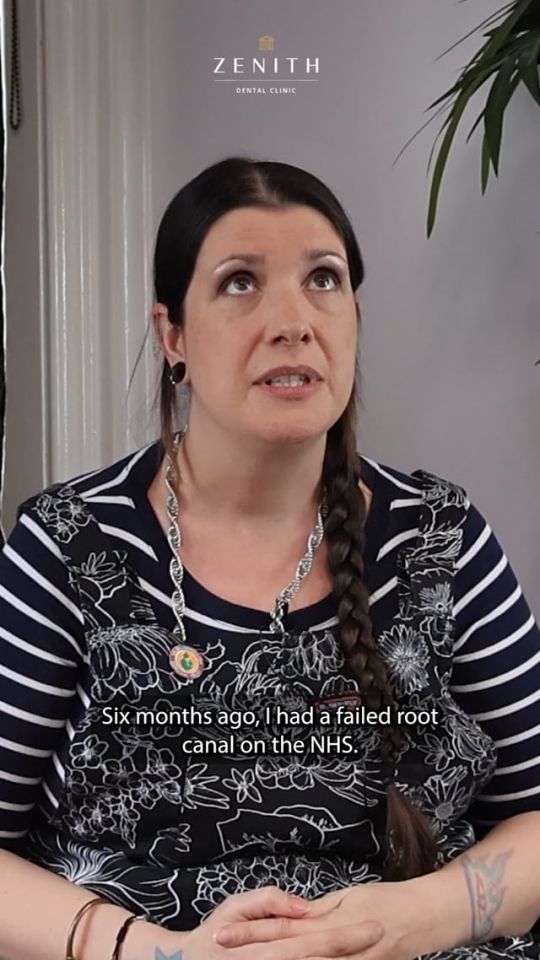
I was always nervous of visiting the dentist. Zenith has a lovely warm and welcoming atmosphere as soon as you walk through the door. Karan puts me at ease completely. No treatment is rushed and you feel like you are the only patient I cannot recommend highly enough
My experience was very pleasant . Even though I was running late, and was worried. They could see how anxious I was. They offered me a drink, directed me into the seated area, and talked with me to ensure I was ok. The staff were very helpful, making me feel relaxed. Their professionalism and…
I’ve been a regular patient at Zenith Dental Clinic for some time now, and I can’t recommend them highly enough. The dental team is fantastic. They are incredibly skilled, professional and friendly, but what really stands out is how kind and reassuring they are. I’m a very nervous dental…
Amazing and friendly staff!
Lovely clinic. Was offered a free assessment and given lots of information about Invisalign. All my questions were answered and was also given a scan of my teeth now and how they would look after Invisalign. Very helpful and would come again!
Great service from very friendly staff qhi clearly explain the options open to you. I look forward to getting my smile back.
I had a scale and polish and it was actually quite relaxing. The water is warm and it somehow seemed gentler than other scale and polish treatments I have had elsewhere. I would highly recommend it if you don’t look forward to a scale and polish! The end result was great. I had some protective…
I had a wonderful experience at Zenith - especially with the most expert and truly helpful staff of - Dr Karan Maini and Nurse Marcy. Kasia Joanne Merlin & Maddie. Highly recommended!
Excellent service and beautiful clinic Staff are great and respectful and caring
Customer service was great from the moment I walked through the door. The atmosphere was welcoming, relaxing, and clean. My dental treatment was 10/10, and there was a noticeable difference compared with any other dental practice I have attended. A very happy customer 😊
Red brick Zenith clinic building entrance with an arched metal canopy and outdoor lighting.

Why Choose Root Canal Treatment?

Once a nerve is irreversibly inflamed or infected, the tooth will not heal on its own. Leaving it untreated means the infection will spread, causing increasing pain, abscess formation and eventual tooth loss. Root canal treatment removes the source of infection, preserves your natural tooth and relieves the pain at its origin. For many patients with a restorable tooth, it remains the most sensible way to address a root canal problem, and a diagnostic appointment with Dr Stincone will confirm whether it is right for you.

Why the microscope matters

A molar may contain three, four or even five canals, some so fine they are the width of a human hair. Some branch. Some curve sharply. Without high magnification and shadow free light directly into the canal, some of this anatomy is genuinely invisible.

A missed canal is the single most common cause of root canal failure, because the infection persists where it was never reached. With a dental operating microscope, Dr Stincone can locate accessory anatomy, and improve treatment success.

Microscope assisted endodontics is now widely regarded in the clinical literature as the standard of care, particularly for molars and for retreatment cases. Every root canal at Zenith is performed under the microscope as standard, not as an upgrade.

Tooth Pain. What Are Your Options?

Once an infected nerve is irreversibly inflamed, the three options are root canal treatment, tooth extraction with or without replacement, or no treatment at all. Not every tooth is worth saving: if a tooth is too broken down, too compromised by gum disease, or too cracked to restore reliably, a planned extraction followed by an implant or bridge may be a better long term outcome. Dr Stincone will give you an honest answer about which path is right for your tooth, and why.

Expert Root Canal Treatment in Nottingham

Zenith Dental Clinic is a CQC registered private practice in Nottingham. Root canal treatment is performed by Dr Stefania Stincone, BDS, MSc Endodontics, whose primary clinical focus is endodontic treatment. We are Dentistry Awards finalists, and committed to honest, evidence based care from your first consultation through to long term review.

MSc Endodontics

Your root canal clinician

Your root canal is performed by Dr Stefania Stincone, BDS, MSc Endodontics. Root canal treatment is her primary clinical focus. Dr Stincone holds a master's degree in Endodontics and performs every case under a dental operating microscope, applying the same high magnification technique to routine cases and complex retreatments alike.

Independently inspected

CQC registered clinic

Zenith Dental Clinic is registered with and inspected by the Care Quality Commission. CQC registration means our facilities, processes and patient care standards meet regulatory requirements, giving you confidence in the quality and safety of your care.

Used as standard, not as an upgrade

Dental operating microscope

Every root canal at Zenith is performed under a dental operating microscope. High magnification allows Dr Stincone to see more canal anatomy and locate accessory canals. Missed canals are one of the most common causes of root canal failure, and the microscope directly addresses this risk.

Applied on every case

Rubber dam isolation

A protective sheet is used for every root canal treatment as standard. This keeps the tooth separate from the rest of your mouth, helping to keep the area clean and preventing bacteria or fluids from getting into the tooth. It also protects you during the procedure. Using this barrier is an essential part of carrying out root canal treatment safely and to a high standard.

Gold standard materials

Bioceramic sealers

Once the canals are clean and shaped, they are sealed three dimensionally with gutta percha and a bioceramic sealer. Bioceramic sealers are biocompatible, dimensionally stable and have strong evidence for sealing performance. Using the right materials at the sealing stage directly supports the long term success of your treatment.

Worth saving, or not

Honest answers about your tooth

Not every painful tooth should be root canal treated. Some teeth are too broken down, too compromised by gum disease, or too cracked to give a predictable result. Dr Stincone will tell you openly which category your tooth is in, and why, before any treatment begins.

Frequently
Asked
Questions

We want you to feel informed and reassured at every stage of your journey, so here are answers to the most common questions about root canal treatment.
Will the root canal itself hurt?

The pain people associate with root canal treatment is the pain of the infection or inflamed nerve, which is what the procedure relieves. The treatment itself is performed under local anaesthetic, and most patients describe it as comparable to having a large filling. Some mild tenderness for a day or two afterwards is normal and usually settles without prescription medication.

How do I know if I need a root canal?

Typical signs include a lingering ache after hot or cold, pain on biting, throbbing pain that disturbs your sleep, swelling near a specific tooth, or a tooth that has darkened. These symptoms can overlap with other dental conditions, so the only reliable way to know is a diagnostic appointment with Dr Stincone, including a clinical test of the nerve and usually a radiograph.

How long does root canal treatment take?

Most root canal cases can be completed in one or two visits. The length of each appointment depends on which tooth is being treated and the complexity of the canal anatomy. A single canal front tooth is usually faster than a multi canal molar. Dr Stincone will advise you on the expected number of visits at your diagnostic appointment.

What is the success rate of root canal treatment?

The success rate is generally high, but it always depends on the individual case. Published systematic reviews report success rates for primary root canal treatment of roughly 68% to 85% under strict radiographic criteria, with microscope assisted treatment in posterior teeth reported with significantly higher odds of success. Dr Stincone will discuss what this means for your specific tooth at your consultation.

Will I need a crown after root canal treatment?

In most cases, yes. A root canal treated back tooth almost always needs a crown to protect it from fracture under chewing forces. Published evidence is clear that timely placement of the final coronal restoration is one of the strongest predictors of long term tooth survival. Front teeth can sometimes be restored with a bonded filling rather than a crown. The restoration plan is discussed and quoted at your diagnostic appointment.

Can a tooth that has had a root canal still get an infection?

Yes, reinfection can occur if the final restoration leaks and bacteria recolonise the canal, if there was anatomy that was not addressed at the original treatment, or if the tooth fractures. The first line response is usually retreatment, redoing the root canal under the microscope at higher magnification. Surgical options exist if retreatment is not feasible. Dr Stincone will explain all of this clearly at your consultation.

Do you treat referred cases from other dentists?

Yes. Dr Stincone accepts referrals from general dentists for complex root canal treatment and retreatment cases, particularly molars, calcified canals, retreatments of previously failed work, and cases requiring high magnification technique. Referring clinicians can use the refer a patient form on this site.

How much does root canal treatment cost?

Root canal treatment at Zenith starts from £700. The final fee depends on which tooth is being treated: a single canal incisor is simpler than a four canal molar, and retreatment of a previously treated tooth is quoted higher. A back tooth will normally need a crown afterwards, quoted separately at your diagnostic appointment. A clear, written quote is provided before any treatment begins.

0% root canal finance options available.
Credit Card*
Debit Card*
Cash
Bank Transfer

*charges may apply for certain cards

What's Included with Your Root Canal at Zenith

From £700

Starting price for a single canal tooth. Multi canal molars and retreatment cases are priced per case. Your written quote is confirmed at the diagnostic appointment before any treatment begins.

  • Root canal treatment performed under dental operating microscope
  • Rubber dam isolation on every case
  • Bioceramic sealer used for three dimensional canal obturation
  • Personalised aftercare guidance
  • Finance available via Tabeo, subject to status
  • Honest recommendation. We will tell you if the tooth is not worth saving

Your Root Canal Clinician in Nottingham

Your root canal treatment at Zenith is performed by Dr Stefania Stincone (BDS, MSc Endodontics, GDC 273694). Root canal treatment is her primary clinical focus. Dr Stincone plans and performs every case with your long term tooth health and comfort in mind, combining high magnification technique with a calm, unhurried approach.

A dentist examining a patient's teeth using a mouth mirror and dental probe during a check up.
Step 1

Book Your Consultation

Book a confidential diagnostic appointment with Dr Stefania Stincone. She will carry out a full clinical examination, sensitivity testing and a periapical radiograph, discuss your symptoms and treatment options, and provide a written fee before any treatment begins. No referral is needed.

A person fitting a clear dental aligner over their teeth, smiling at the camera.
Step 2

Receive Expert Care

Your treatment is performed under local anaesthetic, with rubber dam isolation and the dental operating microscope in use throughout. The infected tissue is carefully removed, the canal system is cleaned and disinfected, and the canals are sealed with bioceramic materials. Most cases are completed in one or two appointments at our Nottingham clinic.

Close up of a person smiling, showing upper teeth with some yellowing at the edges.
Step 3

Restore Your Tooth

Once treatment is complete, you will receive clear aftercare guidance and any follow up needed to monitor healing. Where a crown is required, this is placed within a few weeks of your root canal being finished. We ensure your restored tooth receives the aftercare it needs to stay healthy for many years to come.

Expert Care.
Always.

Dr Karan Maini smiling with arms crossed, wearing branded scrubs
Zenith Dental Clinic is CQC registered and led by Principal Dentist Dr Karan Maini, BDS, Dip OS. We are General Dental Council registered and Dentistry Awards finalists. Root canal treatment is performed by Dr Stefania Stincone, BDS, MSc Endodontics. The clinician who assesses you is the clinician who treats you.

Start Your Journey

A painful tooth does not get better on its own. Book your assessment and find out if root canal treatment is the right answer.
Clinical references & evidence base
  1. Ng YL, Mann V, Rahbaran S, Lewsey J, Gulabivala K. Outcome of primary root canal treatment: systematic review of the literature, Part 1. Effects of study characteristics on probability of success. International Endodontic Journal. 2007;40(12):921 939. PMID: 17931389.
  2. Ng YL, Mann V, Rahbaran S, Lewsey J, Gulabivala K. Outcome of primary root canal treatment: systematic review of the literature, Part 2. Influence of clinical factors. International Endodontic Journal. 2008;41(1):6 31. PMID: 17931388.
  3. Khalighinejad N, Aminoshariae A, Kulild JC, Williams KA, Wang J, Mickel A. The effect of the dental operating microscope on the outcome of nonsurgical root canal treatment: a retrospective case control study. Journal of Endodontics. 2017;43(5):728 732. PMID: 28292597.
  4. Pratt I, Aminoshariae A, Montagnese TA, Williams KA, Khalighinejad N, Mickel A. Eight year retrospective study of the critical time lapse between root canal completion and crown placement. Journal of Endodontics. 2016;42(11):1598 1603. PMID: 27625148.
  5. Lynch CD, Burke FM, Ni Riordain R, Hannigan A. The influence of coronal restoration type on the survival of endodontically treated teeth. European Journal of Prosthodontics and Restorative Dentistry. 2004;12(4):171 176. PMID: 15691191.
  6. do Carmo WD, Verner FS, Aguiar LM, et al. Missed canals in endodontically treated maxillary molars: prevalence and association with periapical lesion using cone beam computed tomography. Clinical Oral Investigations. 2021;25(4):2317 2323. PMID: 32875385.
  7. Ahmad IA. Rubber dam usage for endodontic treatment: a review. International Endodontic Journal. 2009;42(11):963 972. PMID: 19825034.
  8. Ruksakiet K, Hanak L, Farkas N, et al. Antimicrobial efficacy of chlorhexidine and sodium hypochlorite in root canal disinfection: a systematic review and meta analysis of randomised controlled trials. Journal of Endodontics. 2020;46(8):1032 1041. PMID: 32413440.
  9. Care Quality Commission. Standards for dental services. CQC, 2024. cqc.org.uk
  10. General Dental Council. The Standards for the Dental Team. GDC, latest revision. gdcuk.org